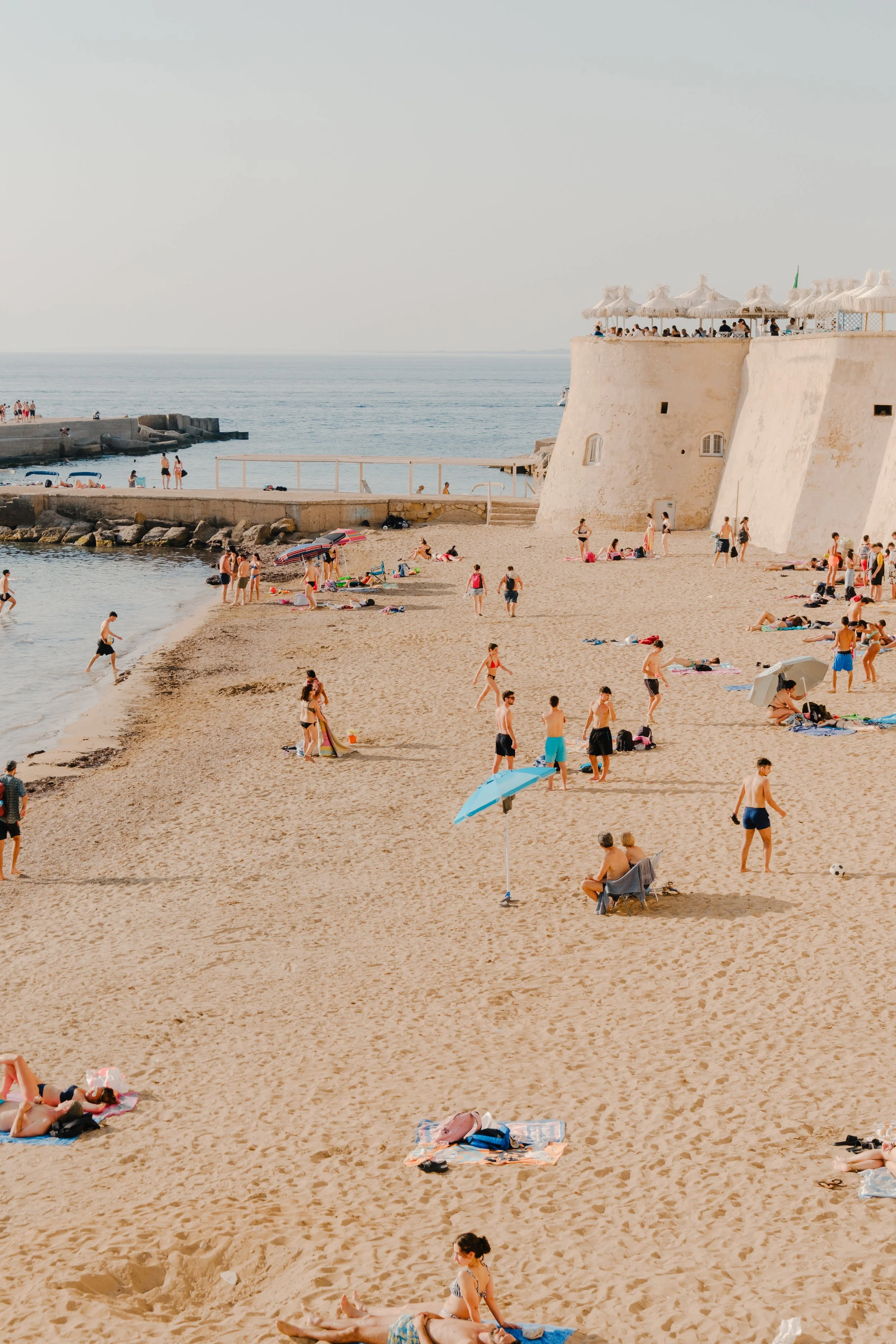

Palazzo Coppola is located in the historic centre of Matino, on the Ionian side of Salento, ideally placed ten minutes from some of the region’s most beautiful beaches and within easy reach of the inland towns and landscape—far enough from the summer crowds, yet close to everything.
Matino is a small town resting on a hillside facing the Ionian Sea. Its name recalls the Italian word mattino, possibly to recall the sun rising over its eastern ridge and suddenly flooding its alleys with light.
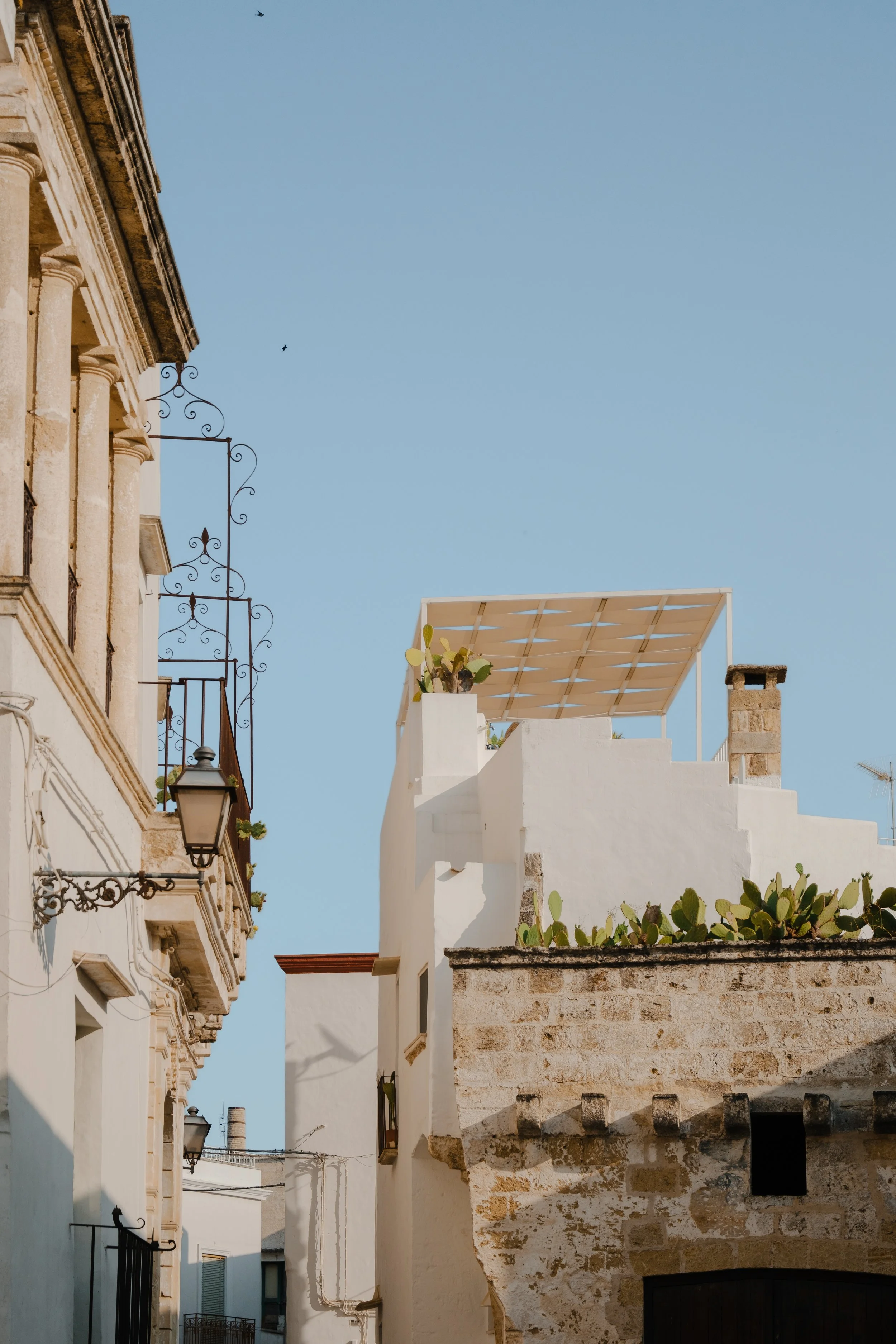
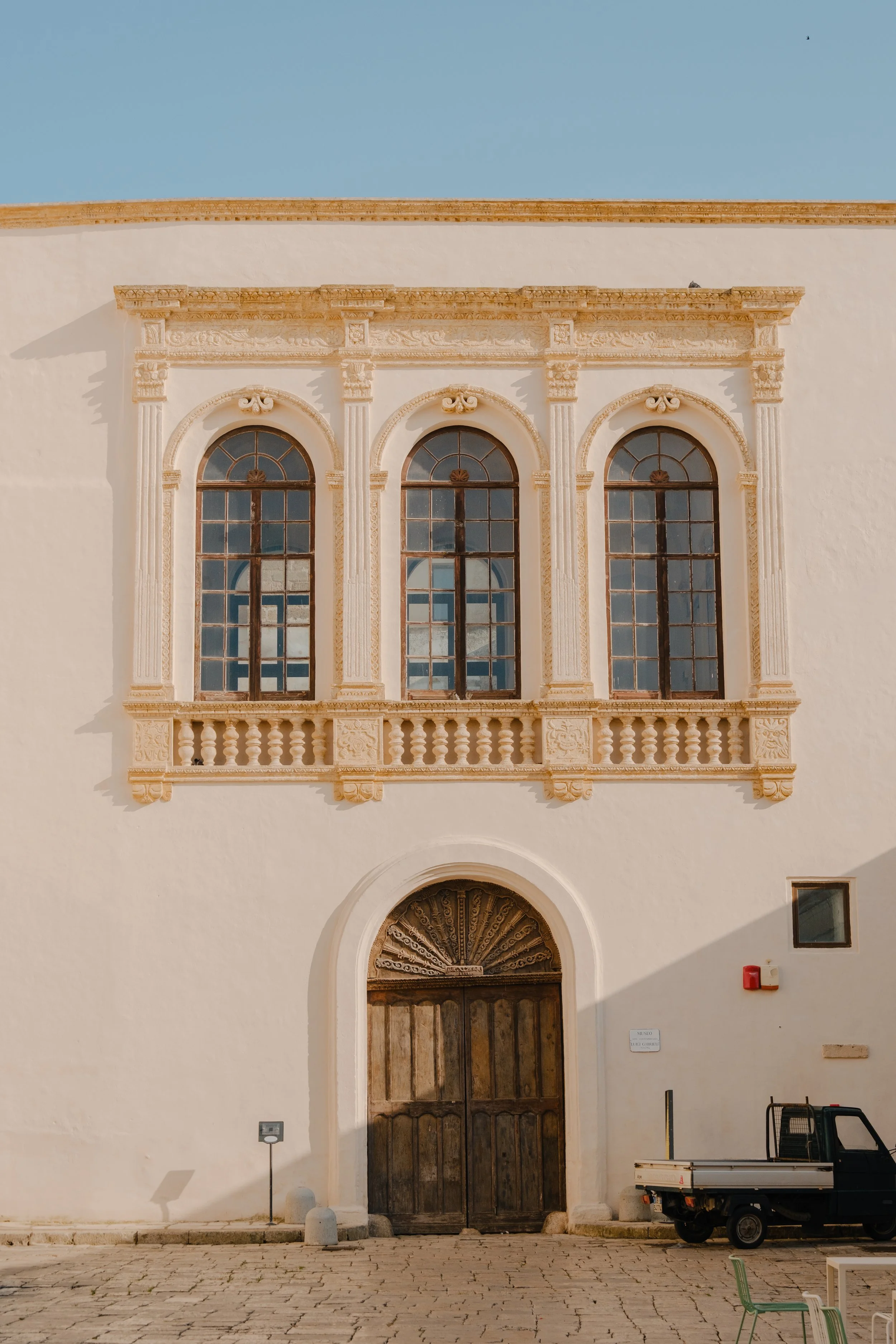
Largely faithful to its sixteenth- and seventeenth-century structure, Matino is unlike any other town in Salento. The historic centre unfolds downhill in a tangle of winding streets, archways, and courtyards. The houses are white, built side by side to cast shade against the sun, tall and narrow to catch slivers of light and sky. They are often connected by inventive stairs and open passages. Beneath, the hill is carved with cave-like rooms that once housed olive mills—producing oil that lit the streets of Europe for centuries.
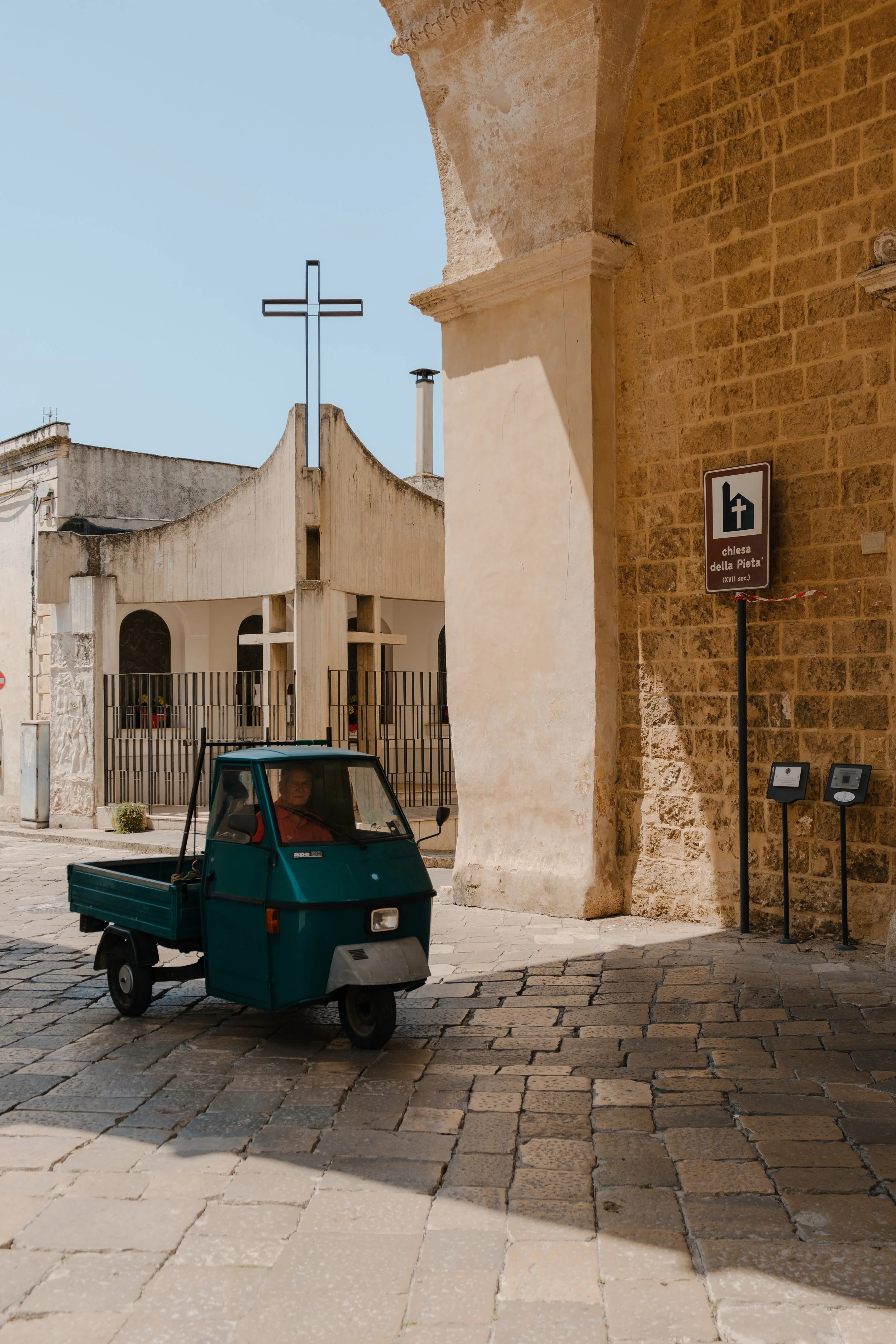
Salento is a low peninsula between two seas: fields of olive groves, dry-stone walls and Mediterranean scrub, dotted with whitewashed villages and port towns.
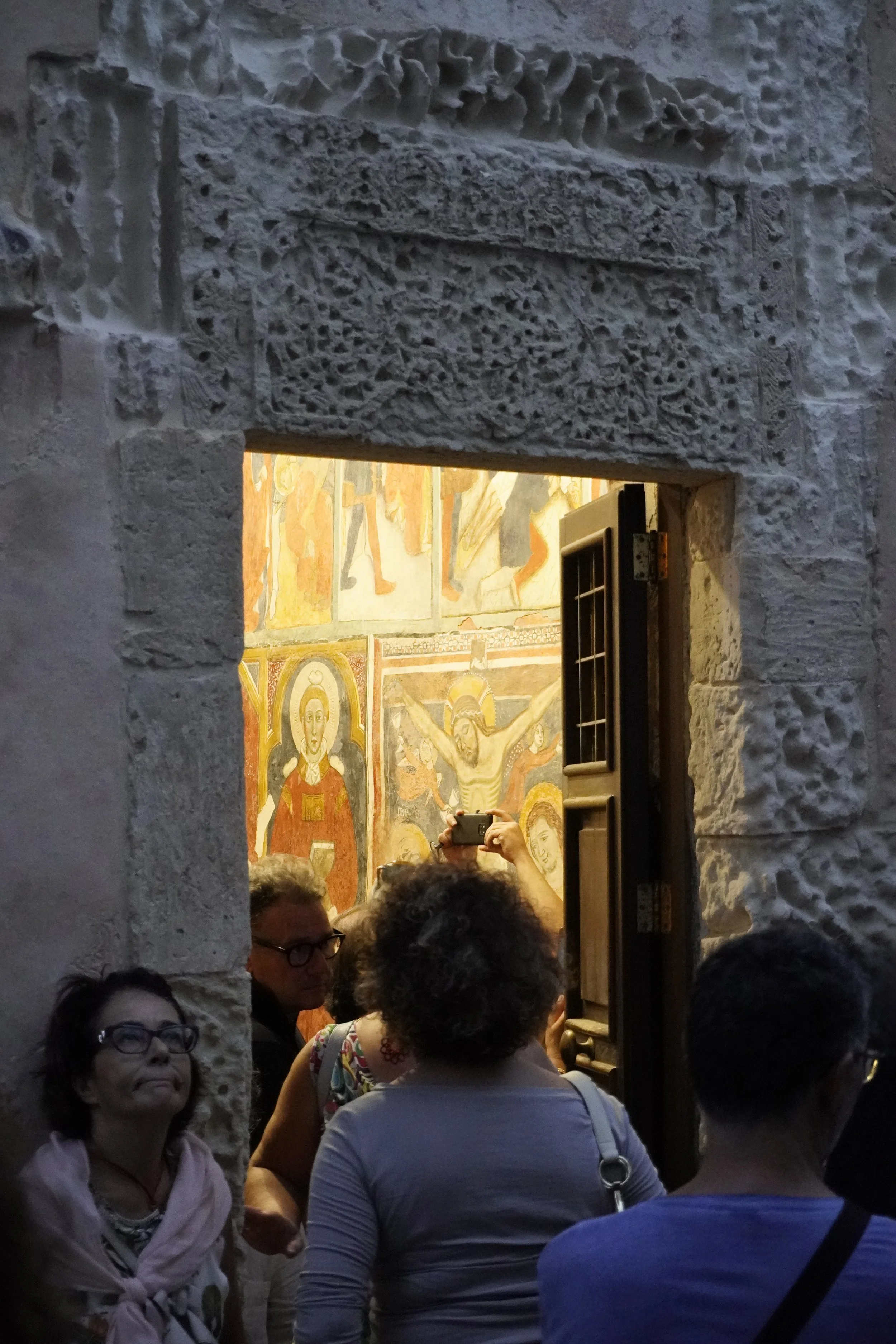
The architecture is born of necessity—of Baroque faith and agrarian pragmatism. Limewashed or left bare, its surfaces blacken in the rain and are ennobled by flourishes carved in soft stone, slowly erased by time and weather. Gargoyles storm religious buildings; frescoes bloom within. Beyond, pagan gods still linger in folklore: in purifying dances and rituals not yet forgotten.
Ruined masserie, abandoned infrastructure and olive groves hit by Xylella mark a lush landscape yet to be redefined, turning it into a testing ground for glocal tourism as it brings local economies and traditions, heritage buildings and an ever-growing international audience into contact.
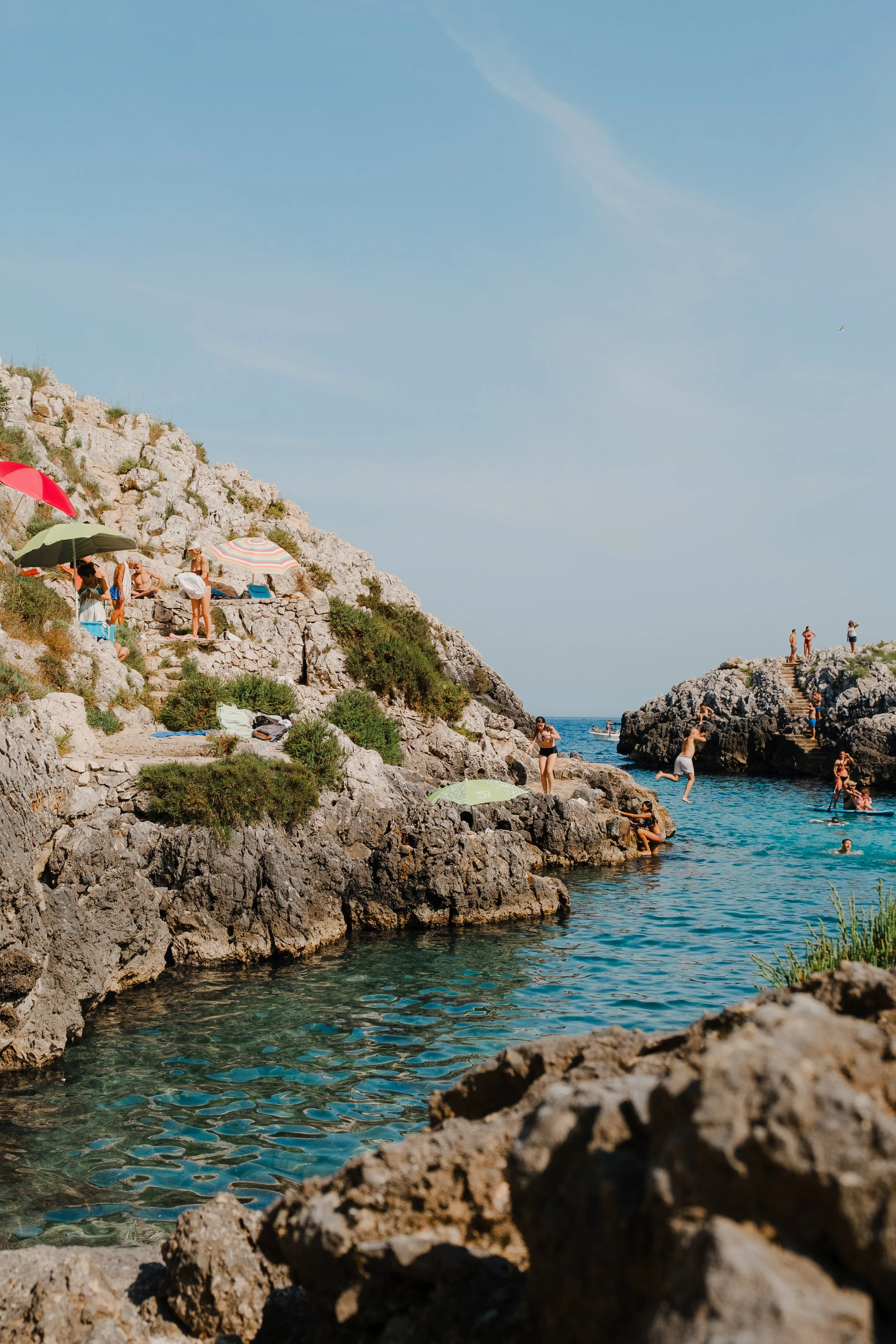
Here, the sea is never far. It frames the horizon with both sunrise and sunset.
Salento is Messapian, Greek, Roman, Byzantine, Norman, Swabian, Angevin, Aragonese, Spanish, Baroque and irredeemably modernist. Provincial yet urban in spirit. Slow but ingenious. Unapologetically passionate. Rhizomatic, motorised and gloriously stubborn.
The Italian heel, the easternmost tip of Italy, Terra d’Otranto, fragment of Africa, de finibus terrae (the end of lands) for the Latins, for the Italians the American dream, for foreigners what most Italian there is.